

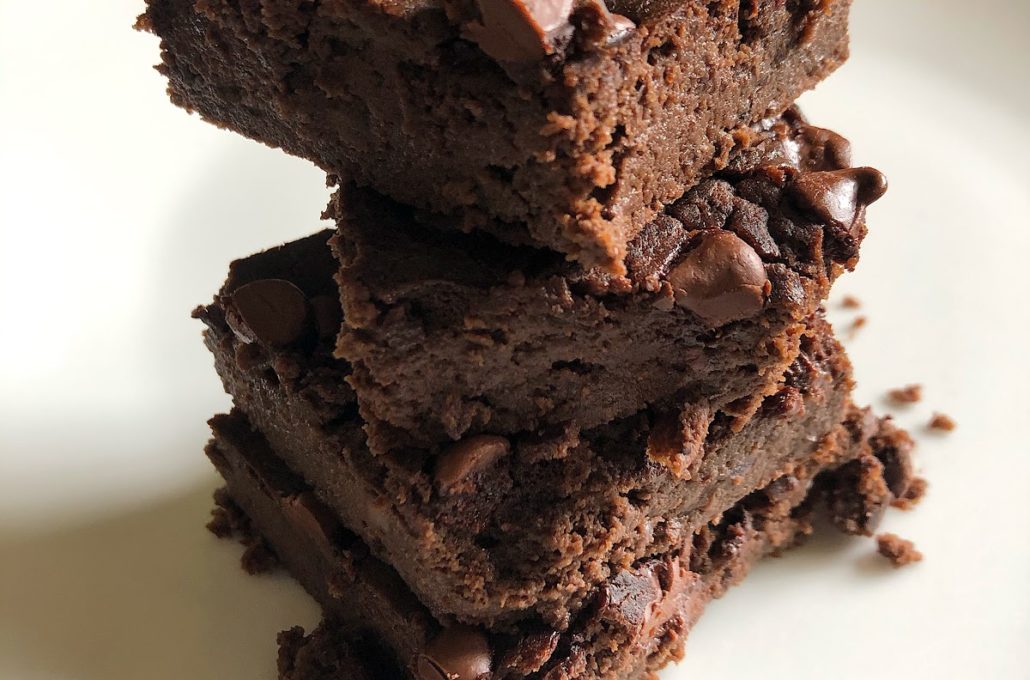
We’re here to show you that a healthy, low-glycaemic diet can satisfy your sweet tooth without spiking your blood sugar or sending you into a calorie-heavy food coma. In this brownie recipe, we are replacing flour with black beans and sugar with a monk fruit/xylitol blend, but leaving the eggs, oil, chocolate, and all the fudgy decadence right where it belongs.
Black beans are the perfect ingredient to add structure for dessert, as they have a glucose index (GI) value of 30 (very low) versus white flour which has a very high GI value of about 73 [1]. They are full of complex carbohydrates for the cakey texture we need, but they’re also full of fibre and protein, which slow their digestion and reduce their GI. Black beans are also an awesome source of iron.
While most chocolate treats are loaded with sugar, unsweetened cocoa powder alone is very low glycaemic (GI value 24) [1]. We are going to add some semi-sweet chocolate chips to this recipe, so these brownies are not 100% sugar-free, but that small amount of added sugar is balanced by a lot of protein and some healthy fat. Feel free to leave the chips out if you’re avoiding sugar completely.
Ingredients
1 can organic black beans
3 eggs
⅓ cup coconut oil
1 tsp vanilla
½ cup unsweetened cocoa powder
½ cup monk fruit sweetener (1:1 sugar substitute)
½ tsp baking powder
¼ tsp salt
½ tsp powdered instant coffee (optional)
½ cup semi-sweet chocolate chips
Instructions
- Preheat the oven to 180°C and grease your baking dish of choice. We used a 7 x 11 inch pyrex, but a 9 x 9 inch would work just as well. 8 x 8 inches would make thicker brownies and may take a little longer to bake.
- Open your can of black beans and drain and rinse them well in a colander shaking them well to dry. Your beans are replacing the flour in this recipe, so removing as much liquid as possible is important. Pulse the beans in a food processor until they qualify as a thick puree (try not to liquefy them completely).
- Add vanilla, your scoop of coconut oil, and all three eggs into the puree. Pulse the wet ingredients together until they are evenly incorporated.
- In a small bowl, stir together the cocoa powder, sugar substitute, salt, baking powder, and instant coffee powder (again, optional, but encouraged). Pour these dry ingredients into the food processor with the wet ingredients and pulse again until just incorporated. Note: if you choose to skip the second bowl and add each of the dry ingredients individually, you risk uneven baking powder incorporation and an uneven rise.
- Pour the complete mixture from the food processor into your greased baking dish and top with the chocolate chips.
- Bake for 35 minutes. If the brownies are done, a clean knife will still look clean after poking into the center of the dish. If the knife doesn’t come out clean, give them a few more minutes and check again.
- Let the brownies cool completely before slicing and serving (they will not hold their shape otherwise). Of course, if you want to eat them hot, with a spoon, directly from the pan, that’s cool too. Your secret is safe with us.
- The University of Sydney. “Search for Glycemic Index.” The University of Sydney. Accessed February 12, 2021. http://www.glycemicindex.com/foodSearch.php
Share:
Related Posts

When Stress Affects Digestion (and Vice Versa): Restoring Balance Through Enzymes
2026 The connection between the brain and the digestive tract is anything but one-way. Practitioners have long observed that periods of stress often coincide with

What Is Insulin Resistance and Why Should I Know About It?
Written by Laura Kunces, PhD, RD, CSSD | 2026 It is estimated that 40% of adults in the United States ages 18-44 are insulin resistant,

Ashwagandha: An Ancient Herb for Modern Life with Kirsten Vaderhegghen
October 28 2025 • Thorne Trending wellness ideas with Kirsten Vaderhegghen, Thorne Medical Affairs Coordinator During this episode you’ll learn about: This week’s topic: Ashwagandha, an ancient

The Invisible Invader: Understanding Microplastics and How to Support Your Body’s Defense
Researched Nutritionals | 2026 What Are Microplastics and Where Do They Come From? Microplastics are plastic particles less than 5mm in length. This is roughly

Creatine 101: What It’s For, How to Use It, and Side Effects
Written by Joel Totoro, RD | 2025 Because athletes and bodybuilders are constantly looking for an edge to help their performance, it’s no surprise they