


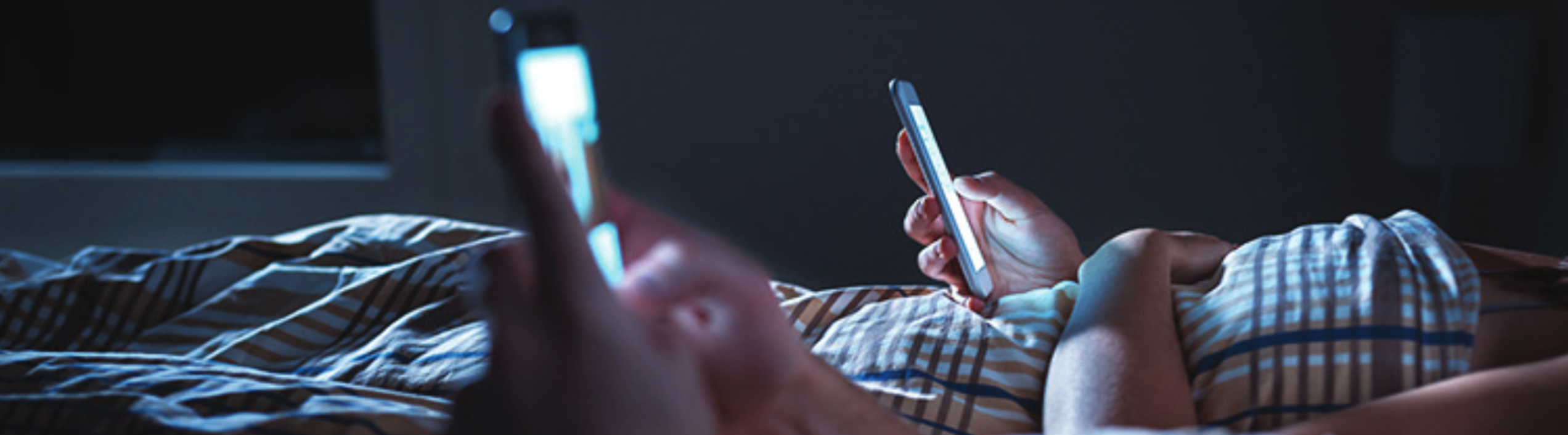
If hitting the snooze button, waking up feeling tired, and craving a post-lunch nap all sound familiar to you, your circadian rhythm may be out of balance. Your circadian rhythm is your body’s internal clock, according to Ayurveda, run by the master clock in your brain. This master clock is located in the hypothalamus of the brain and is made up of 20,000 nerve cells that create a structure known as the suprachiasmatic nucleus (SCN). This area of the brain makes decisions based on the input it receives directly from the eyes.

This confusion in your brain can cause an imbalance in your circadian rhythm, which in turn may cause sleep disorders, such as insomnia, as well as obesity, diabetes, and seasonal affective disorder.1 It may also affect hormone production and eating habits.
Because the SCN receives input from the eyes, light directly affects your sleep schedule. Before electricity, it was natural for people to rise with the sun and begin to settle down and head to bed after the sun had set. Now, there are lights and phones that offer an artificial light source regardless of the sun’s location. This input of light can confuse the SCN, which naturally tries to send signals to the brain that it is time to rest once it gets dark by releasing melatonin.1 The SCN also responds to other environmental cues such as temperature.2
How to Rebalance Your Circadian Rhythm

PUT ELECTRONICS ASIDE
All of the electronics you own likely emit blue light, which can confuse the SCN because it is seeing such a bright light after the sun has set. Set aside the electronics at least an hour before bed, in order to give your body enough time to produce the melatonin that is needed to send the message that it is time to fall asleep. If you have to be on your computer or phone, consider dimming the brightness or turning on the “Night Shift” option.
Sleeping to the Beat of Your Circadian Rhythm
Don’t deprive yourself of the sleep that your body and mind need to function at their best. Going to bed around 10 p.m. and waking up with the sun may be a stretch for some, but it can help your overall performance throughout the day. Challenge yourself to try this new sleep pattern for at least one week so you can feel the difference. As the old saying goes “small changes eventually add up to huge results.”
Circadian Rhythms. National Institute of General Medical Sciences. https://www.nigms.nih.gov/education/pages/factsheet_circadianrhythms.aspx
Circadian Rhythms and Your Internal Clock: 4 Ways to Sync with the Winter Season. The Chopra Center. https://chopra.com/articles/circadian-rhythms-and-your-internal-clock-4-ways-to-sync-with-the-winter-season
Ayurvedic Wisdom for Night Owls: How to Reset Your Sleep Clock. Kripalu Center for Yoga & Health. https://kripalu.org/resources/ayurvedic-wisdom-night-owls-how-reset-your-sleep-clock
Share:
Related Posts

The Best Bedtime Snacks for Sleep
Written by Austin Ruff | 2025 Let’s talk about those late-night cravings. Raiding the refrigerator or pantry for something salty or sweet before bed… We’ve all been there. Late-night

Spring Green Kitchari: Ayurvedic Recipe for Gentle Detox
Support and reset your digestive system by giving it a bit of a break with this nourishing recipe! The deeply intelligent Ayurvedic tradition favours gentle

Menopausal Hair Loss & Innovations in Hair Restoration
Dr Alan Bauman and Dr Jaclyn Smeaton Episode 146 on the DUTCH Podcast March 24 2026 In this episode, Dr. Alan Bauman and Dr. Jaclyn

TUDCA vs. Milk Thistle: Which One Supports Your Liver Best?
Written by Ashley Palmer & Pooja Mahtani | 2025 Key Takeaways: TUDCA is a bile acid that enhances bile flow, reduces liver inflammation, and supports

14 Common Questions About PectaSol Modified Citrus Pectin
Written by ecoNugenics An increased interest in natural therapies to treat the body has led to exciting research into a variety of supplements. One common